All-in-One Wheelchair Winter Suit | Warmth from Head to Toe

Vilber's

All-in-One Wheelchair Winter Suit | Warmth from Head to Toe

Color:Black
Size:140
In stock
Quantity:
Pickup available at Workshop Usually ready in 24 hours

All-in-One Wheelchair Winter Suit | Warmth from Head to Toe

Black / 140

Workshop

Pickup available, usually ready in 24 hours

Gaujas iela 18
Vangaži 2136
Latvia

23553444

Sizing

Adaptive clothing sizing guide

Finding the perfect fit for your adaptive clothing should be effortless. At Vilbers.com, we understand the unique needs of our customers, especially those seeking comfortable and functional wheelchair adaptive trousers and other adaptive clothing. This guide will help you confidently select the right size, whether you're a paraplegic or quadriplegic individual, or simply looking for inclusive fashion.


How to choose your pants by body measurements

We've designed our sizing charts around body measurements to ensure the best possible fit for our adaptive trousers. To find your ideal size, you'll need to measure your:

  1. Waist: Measure around your natural waistline, typically the narrowest part of your torso.
  2. Hips: Measure around the fullest part of your hips, keeping the measuring tape parallel to the floor.
  3. Thighs: Measure around the fullest part of one thigh.

Important note on waist adjustment: Our adaptive trousers feature an adjustable waist. This means that if the size fits your hips and thighs comfortably, the waist measurement can fluctuate by approximately 20% and still provide a great fit.


Measuring from a seated or lying position

We know that standing to take measurements isn't always possible. You can comfortably and accurately measure yourself while lying down or sitting in your wheelchair. Just follow these simple steps:

  • For Waist: If you're seated, lean slightly to the side to expose your natural waistline. If lying down, simply locate your natural waist. Measure around this area.
  • For Hips: While seated or lying down, ensure the tape measure goes around the fullest part of your hips and bottom. Try to keep the tape measure as level as possible.
  • For Thighs: While seated or lying down, measure around the fullest part of one thigh. Make sure the leg is relaxed.

Don't have a measuring tape? No problem!

You can still accurately measure yourself using a simple household item:

  1. Grab a ribbon, rope, or even a piece of string.
  2. Wrap it comfortably around the area you need to measure (waist, hips, or thigh) while seated or lying down.
  3. Mark the point where the ribbon overlaps.
  4. Lay the ribbon flat and measure its length with a standard ruler.

Measure your favorite garment for a perfect match

For an even more precise fit, you can compare the measurements of your favorite well-fitting pants or shirt to the measurements of our garments. We provide detailed garment measurements for all our items. Simply:

  1. Lay your favorite item flat on a bed or flat surface.
  2. Measure the relevant dimensions (e.g., inseam, waist width, hip width for pants; chest width, sleeve length for shirts).
  3. Compare these measurements to the "Garment Measurements" provided on our product pages.


Sizing

Adaptive clothing sizing guide

Finding the perfect fit for your adaptive clothing should be effortless. At Vilbers.com, we understand the unique needs of our customers, especially those seeking comfortable and functional wheelchair adaptive trousers and other adaptive clothing. This guide will help you confidently select the right size, whether you're a paraplegic or quadriplegic individual, or simply looking for inclusive fashion.


How to choose your pants by body measurements

We've designed our sizing charts around body measurements to ensure the best possible fit for our adaptive trousers. To find your ideal size, you'll need to measure your:

  1. Waist: Measure around your natural waistline, typically the narrowest part of your torso.
  2. Hips: Measure around the fullest part of your hips, keeping the measuring tape parallel to the floor.
  3. Thighs: Measure around the fullest part of one thigh.

Important note on waist adjustment: Our adaptive trousers feature an adjustable waist. This means that if the size fits your hips and thighs comfortably, the waist measurement can fluctuate by approximately 20% and still provide a great fit.


Measuring from a seated or lying position

We know that standing to take measurements isn't always possible. You can comfortably and accurately measure yourself while lying down or sitting in your wheelchair. Just follow these simple steps:

  • For Waist: If you're seated, lean slightly to the side to expose your natural waistline. If lying down, simply locate your natural waist. Measure around this area.
  • For Hips: While seated or lying down, ensure the tape measure goes around the fullest part of your hips and bottom. Try to keep the tape measure as level as possible.
  • For Thighs: While seated or lying down, measure around the fullest part of one thigh. Make sure the leg is relaxed.

Don't have a measuring tape? No problem!

You can still accurately measure yourself using a simple household item:

  1. Grab a ribbon, rope, or even a piece of string.
  2. Wrap it comfortably around the area you need to measure (waist, hips, or thigh) while seated or lying down.
  3. Mark the point where the ribbon overlaps.
  4. Lay the ribbon flat and measure its length with a standard ruler.

Measure your favorite garment for a perfect match

For an even more precise fit, you can compare the measurements of your favorite well-fitting pants or shirt to the measurements of our garments. We provide detailed garment measurements for all our items. Simply:

  1. Lay your favorite item flat on a bed or flat surface.
  2. Measure the relevant dimensions (e.g., inseam, waist width, hip width for pants; chest width, sleeve length for shirts).
  3. Compare these measurements to the "Garment Measurements" provided on our product pages.


Getting dressed for cold weather is one of the most demanding parts of an outing for wheelchair users with limited mobility, and for the people who care for them. Layers, sleeves, joints that can't be forced. By the time everything is on, everyone is tired. The Vilber's All-in-One Wheelchair Winter Suit was designed to solve exactly this.

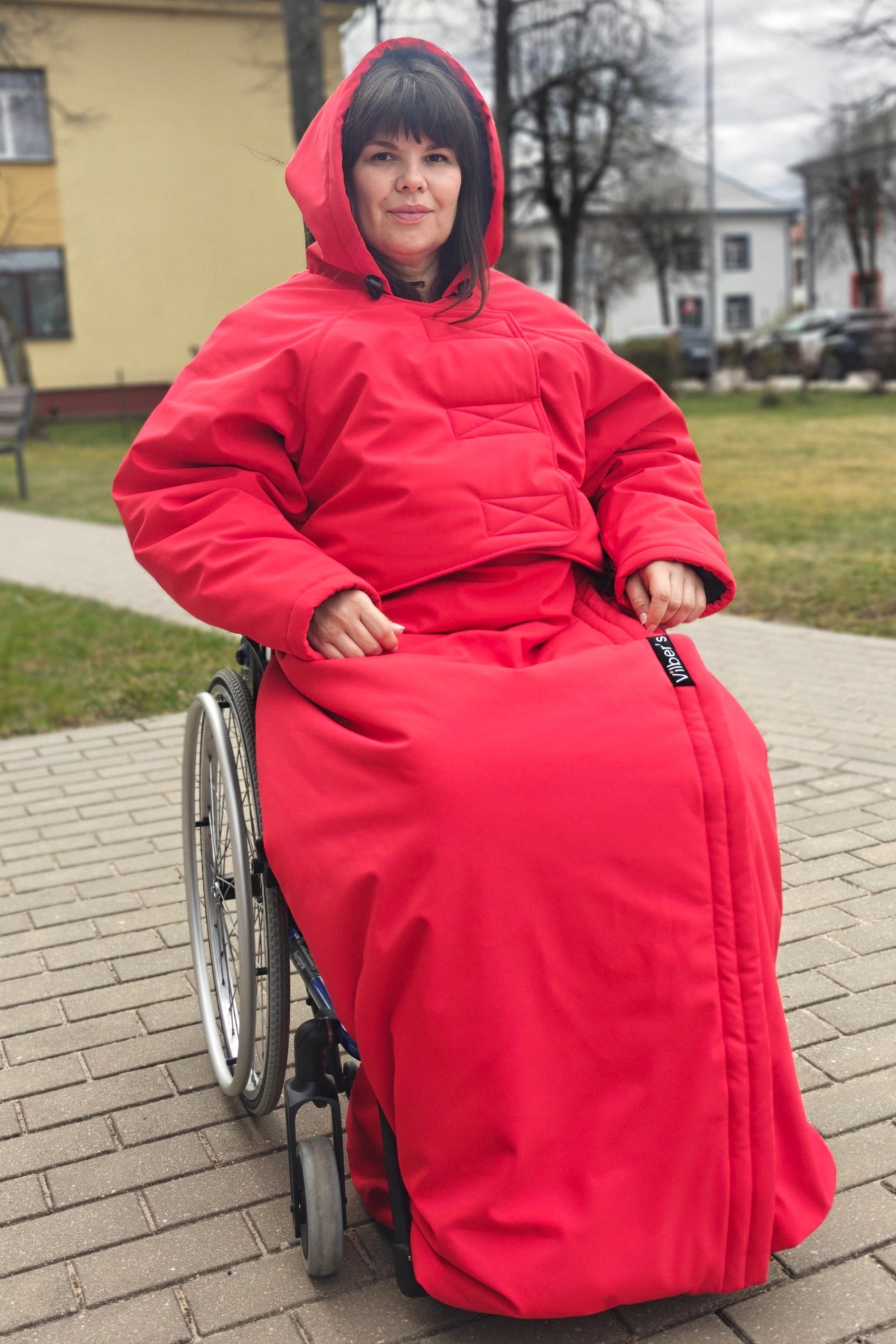
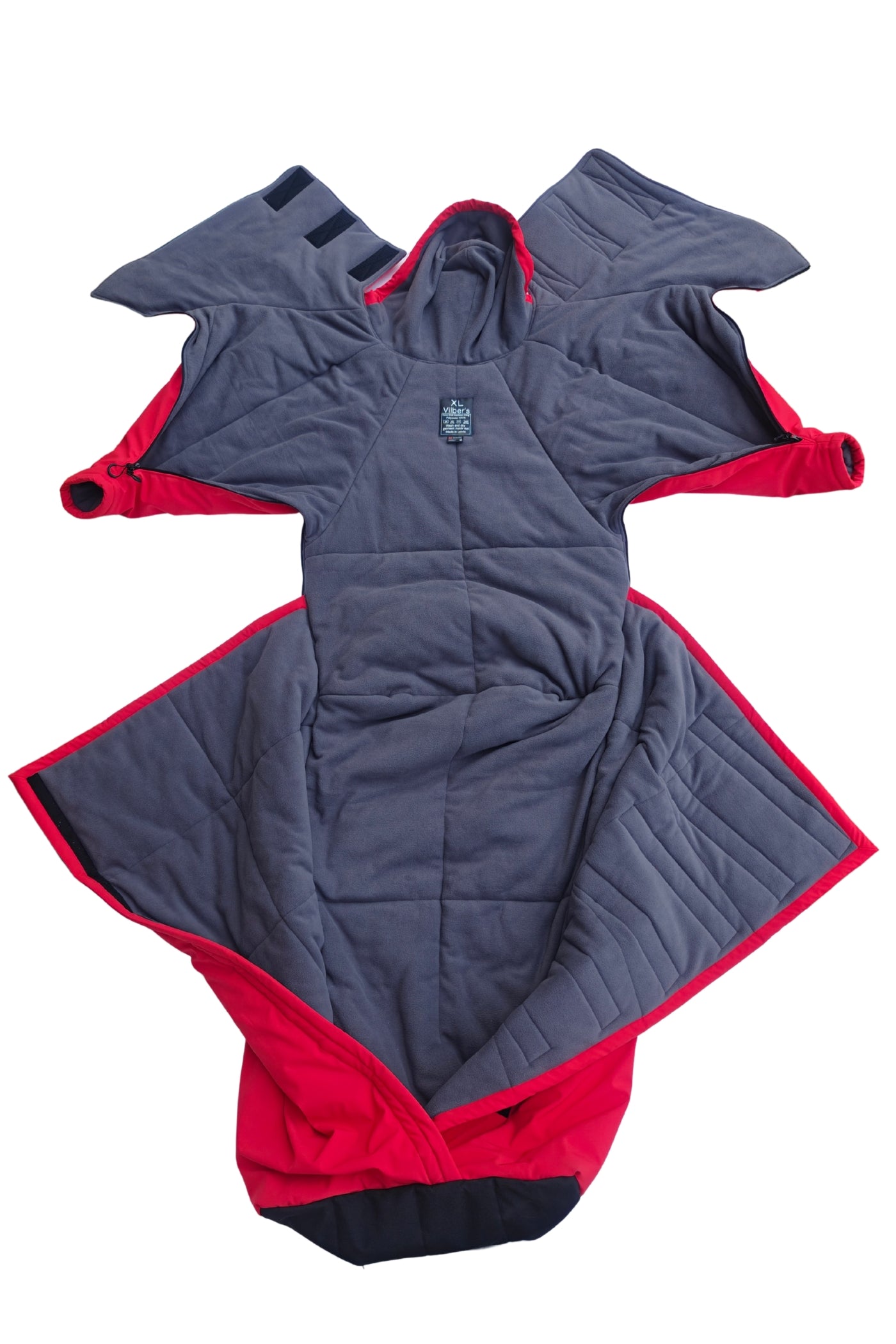
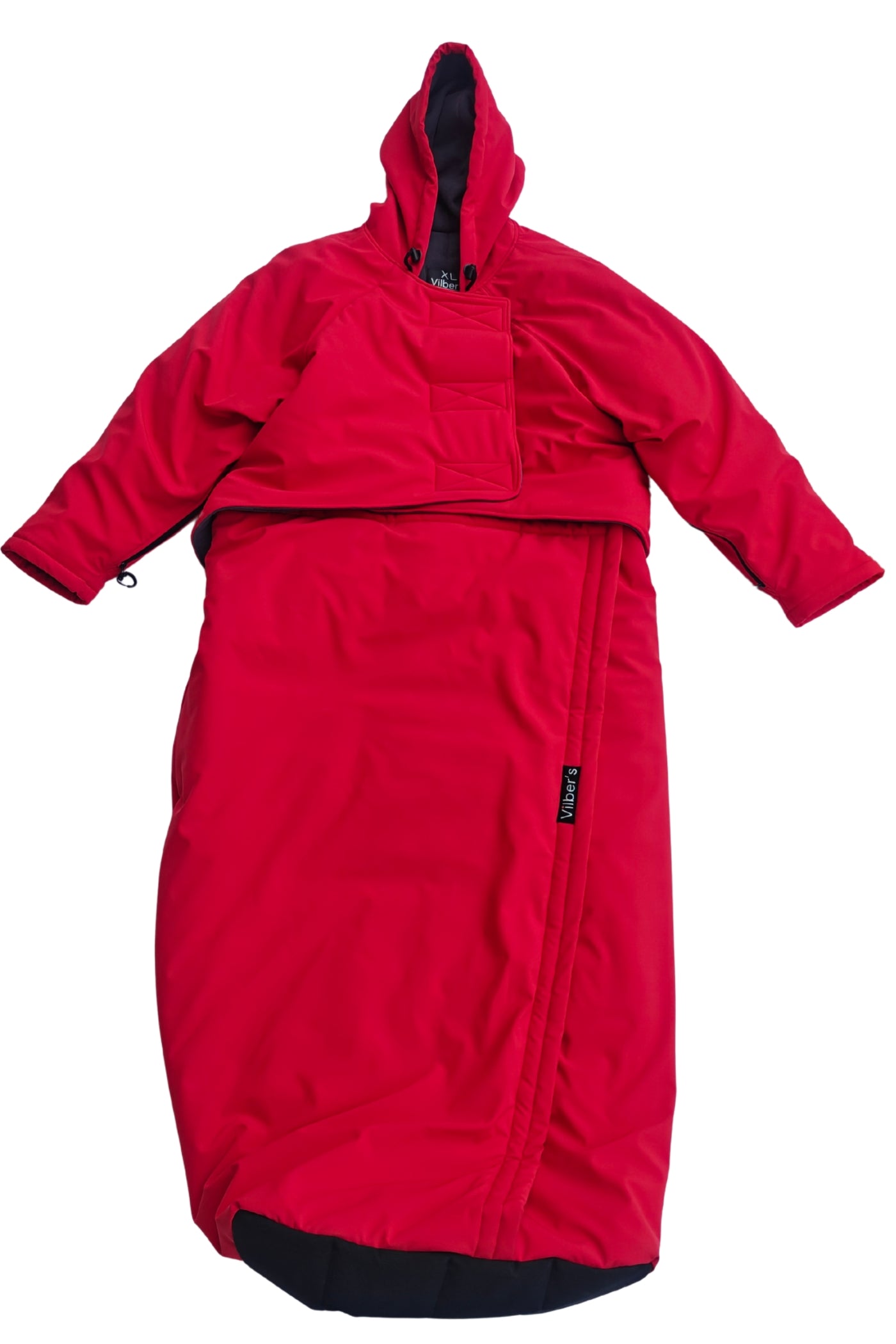
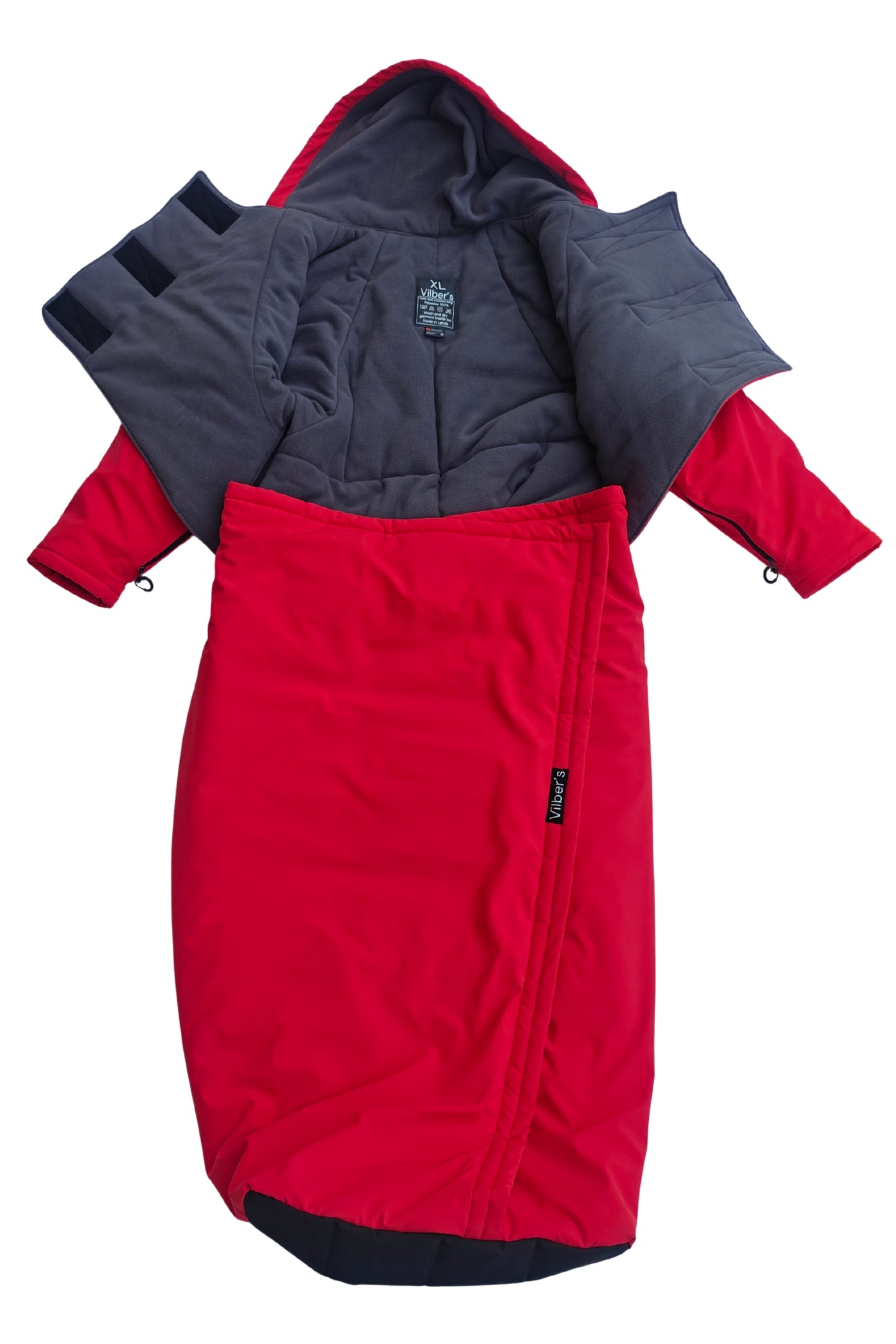
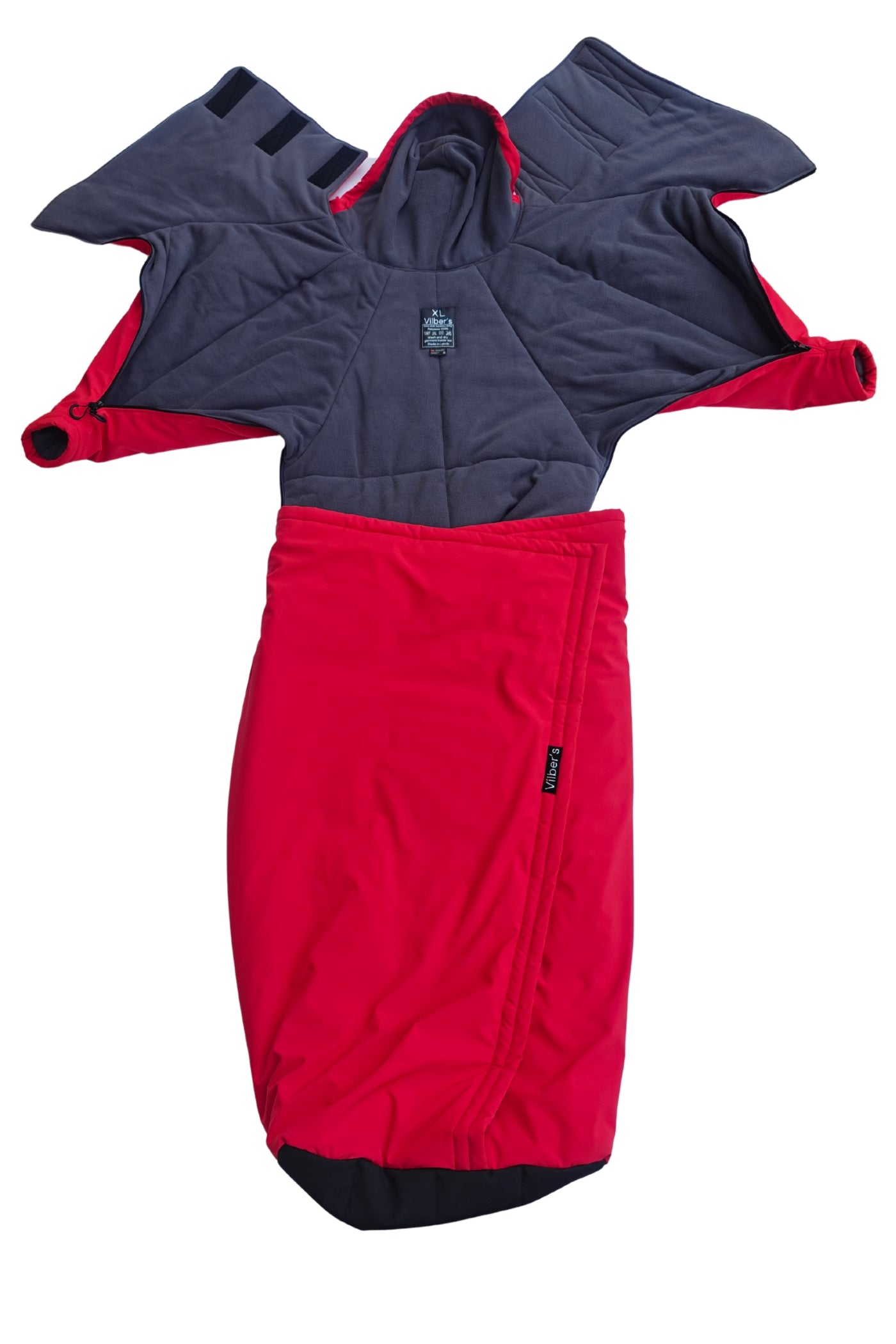
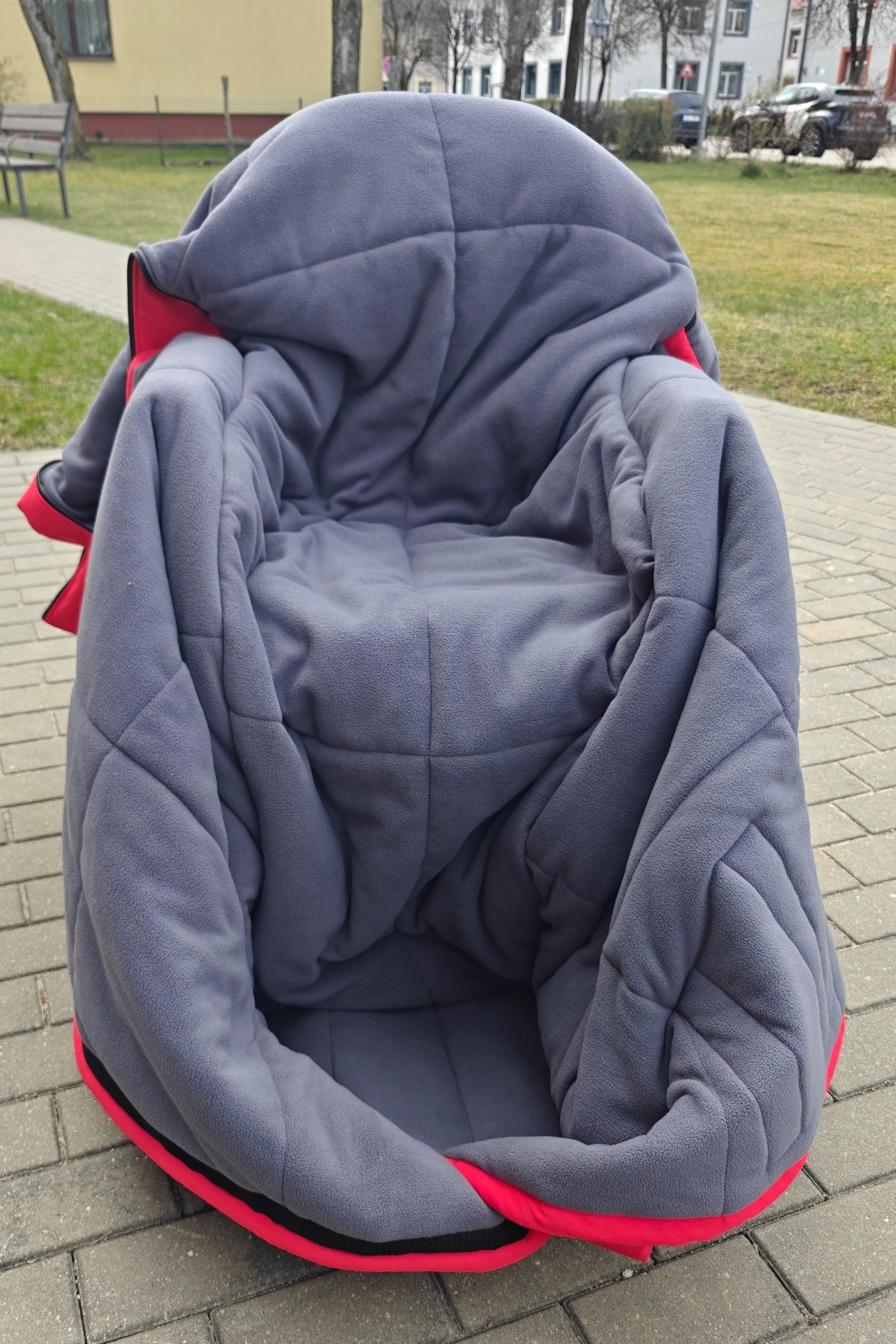
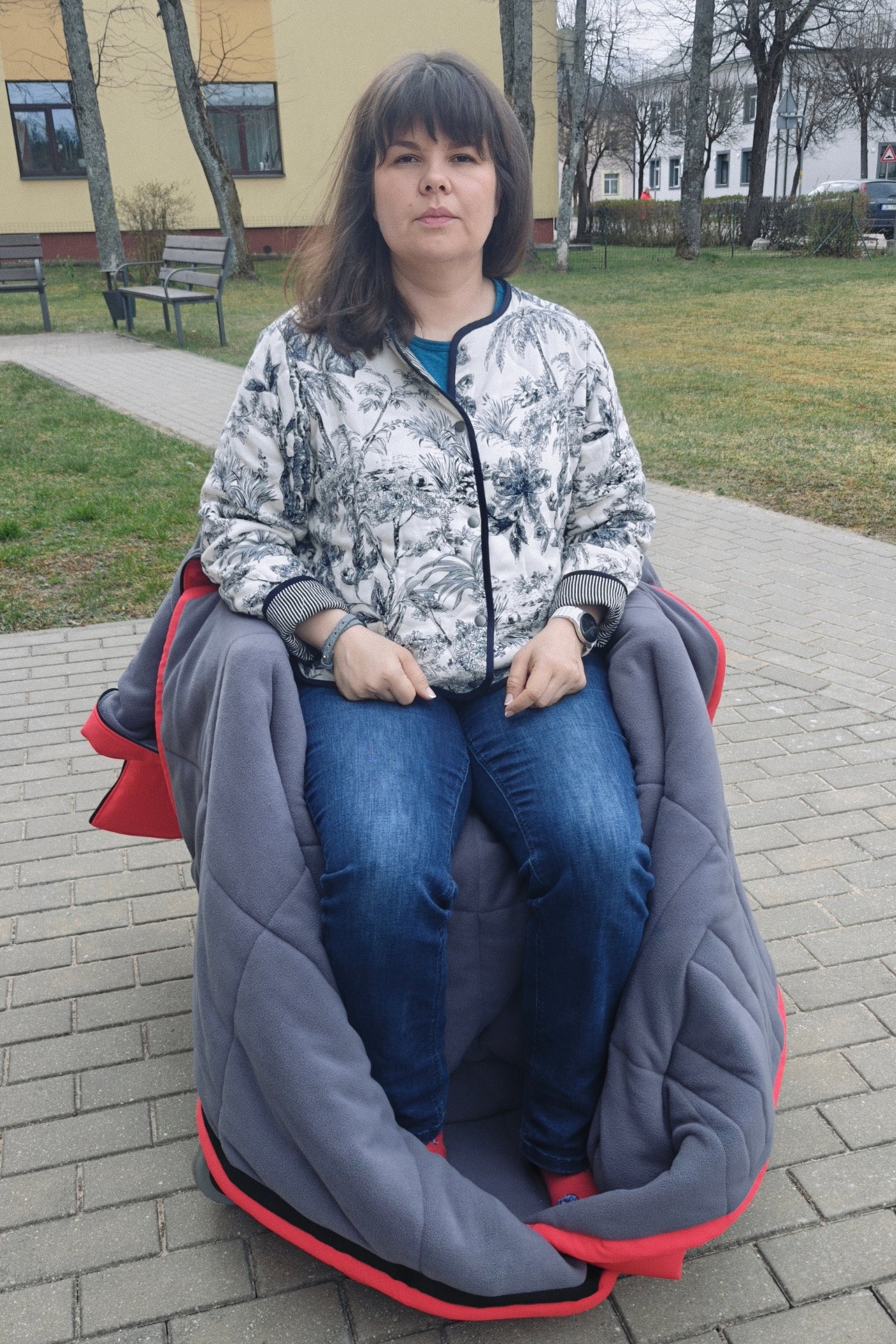
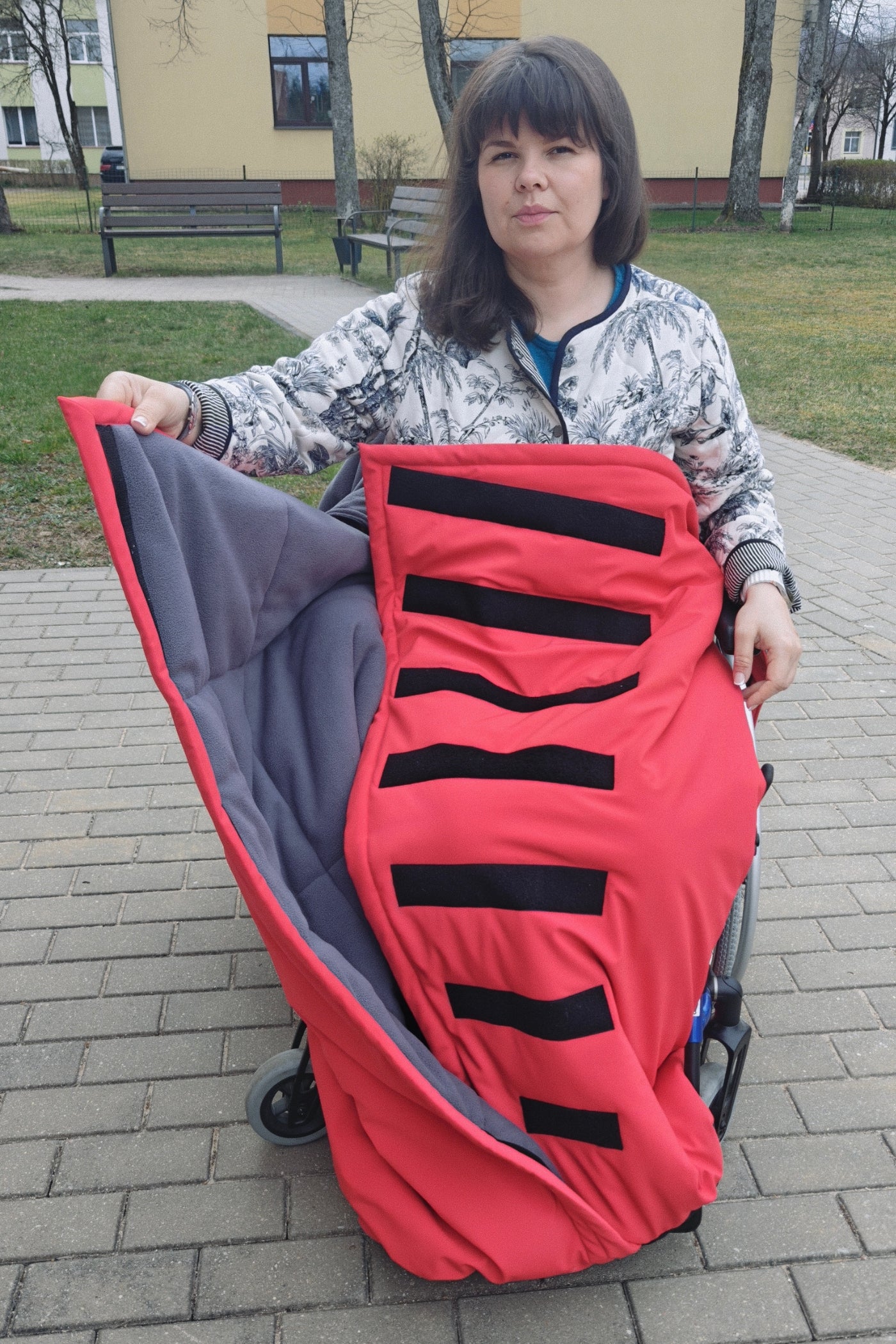
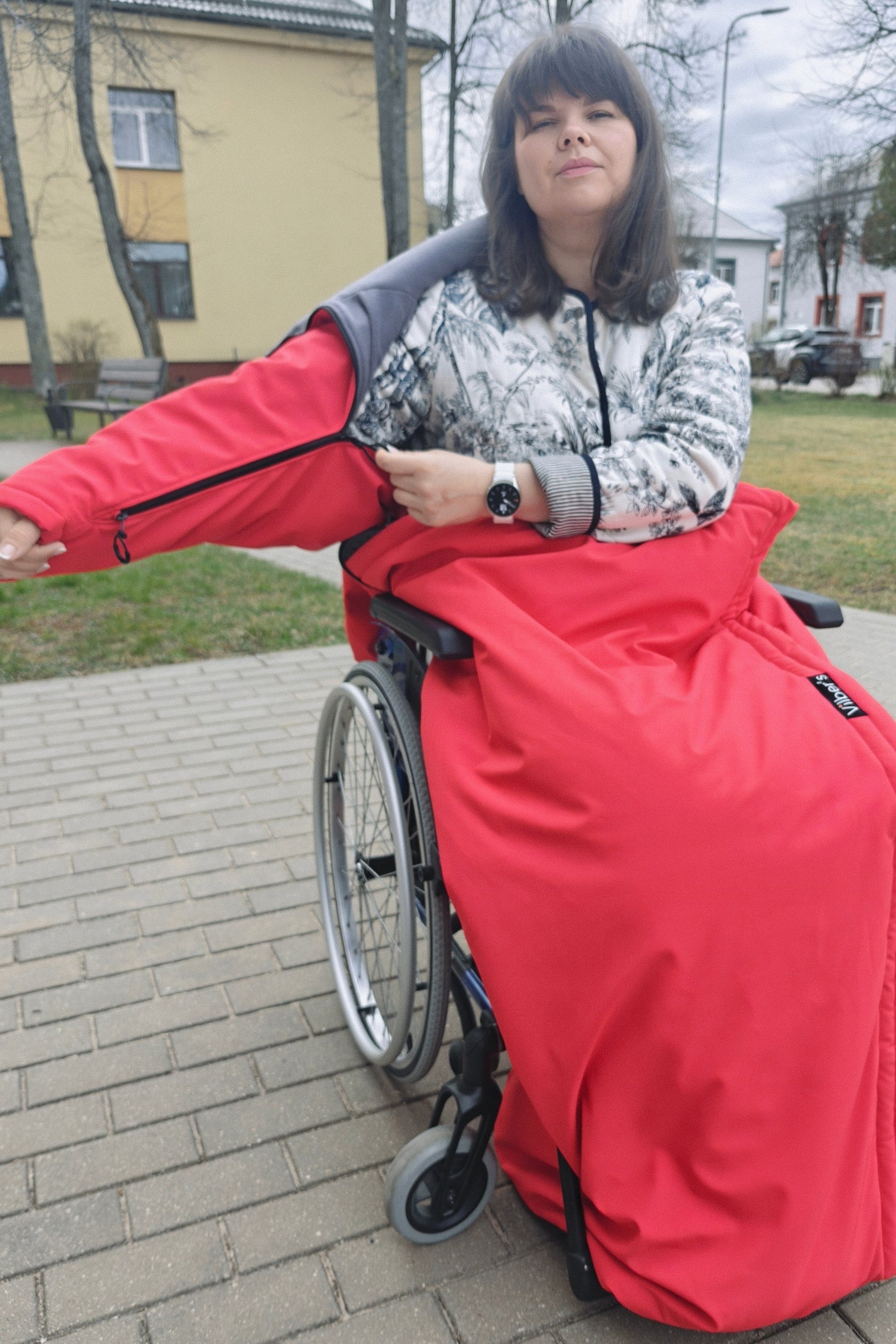
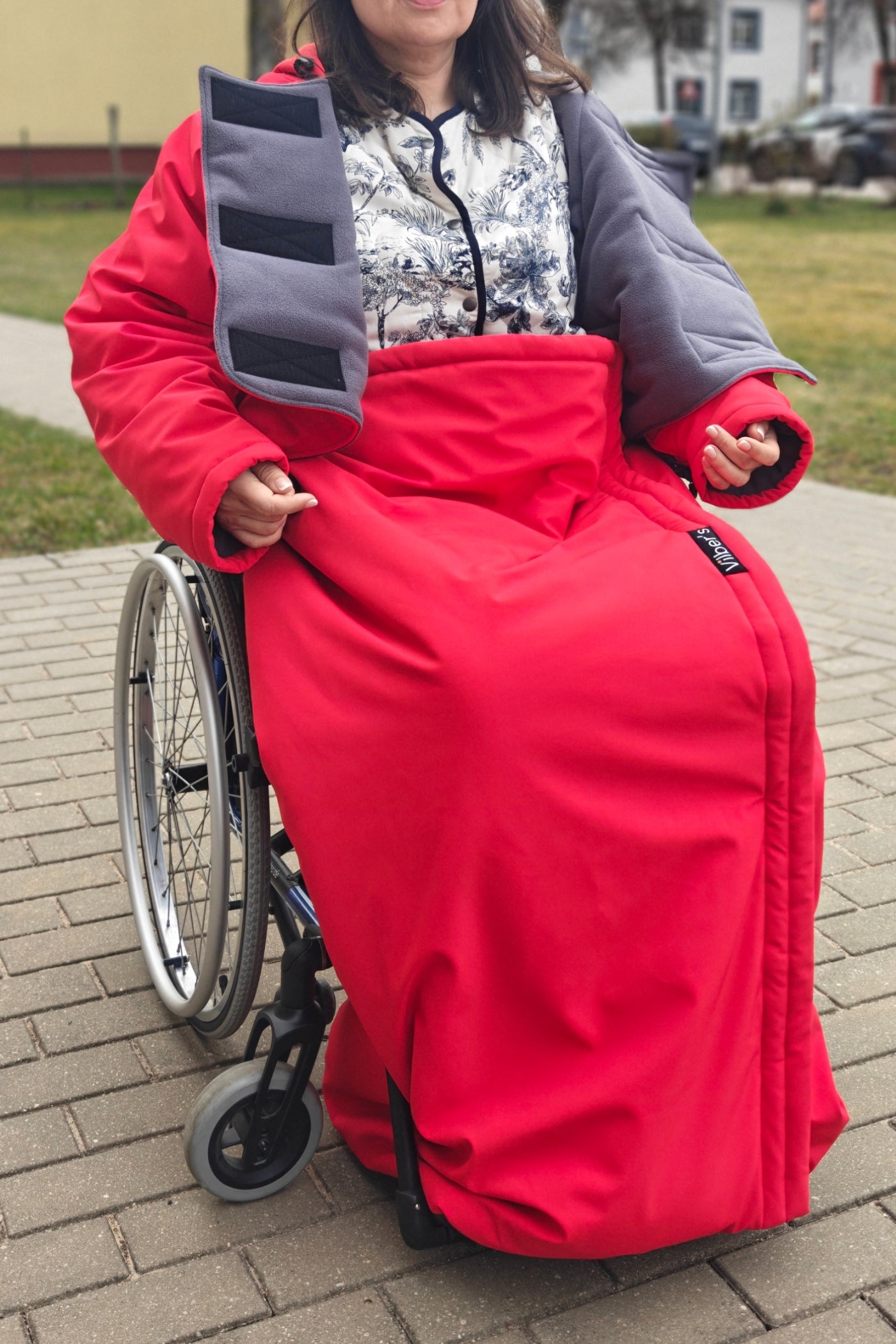
The suit unfolds completely flat, like a blanket, and is laid directly onto the wheelchair seat. The person being cared for is transferred in while wearing their home clothes or pyjamas, the suit is closed around them, and they are ready to go outside. The whole process takes two to three minutes. From the outside, the result looks like a beautifully fitted winter coat, because in most cases how a person looks when they go out matters just as much as how warm they are.

This is an assisted dressing garment, meaning it is put on and taken off with the help of a carer. It is suitable for manual and electric wheelchairs, and is designed for outdoor use in cold weather conditions, including temperatures well below freezing.

Construction and materials

The suit is built from three functional layers across the entire body, from the hood down to the feet. The outer layer is a softshell membrane fabric with a water and precipitation resistance rating of 8,000 mm, providing reliable protection against wind, snow and light rain. The middle layer uses 3M Thinsulate™ Type J250 insulation, the same class of insulation found in high-performance ski and outdoor apparel. An important property of this insulation is that it does not absorb moisture, which means it retains its full thermal performance even if the inside of the suit becomes wet. In a care context, this is not a minor detail. The inner layer is soft polar fleece, which dries quickly, feels warm and gentle against the skin, and has enough texture to prevent the wearer from sliding around inside the suit. In garments that use smooth polyester linings, a seated person can shift or slip, which is both uncomfortable and unsafe. The fleece lining addresses this practically and quietly.

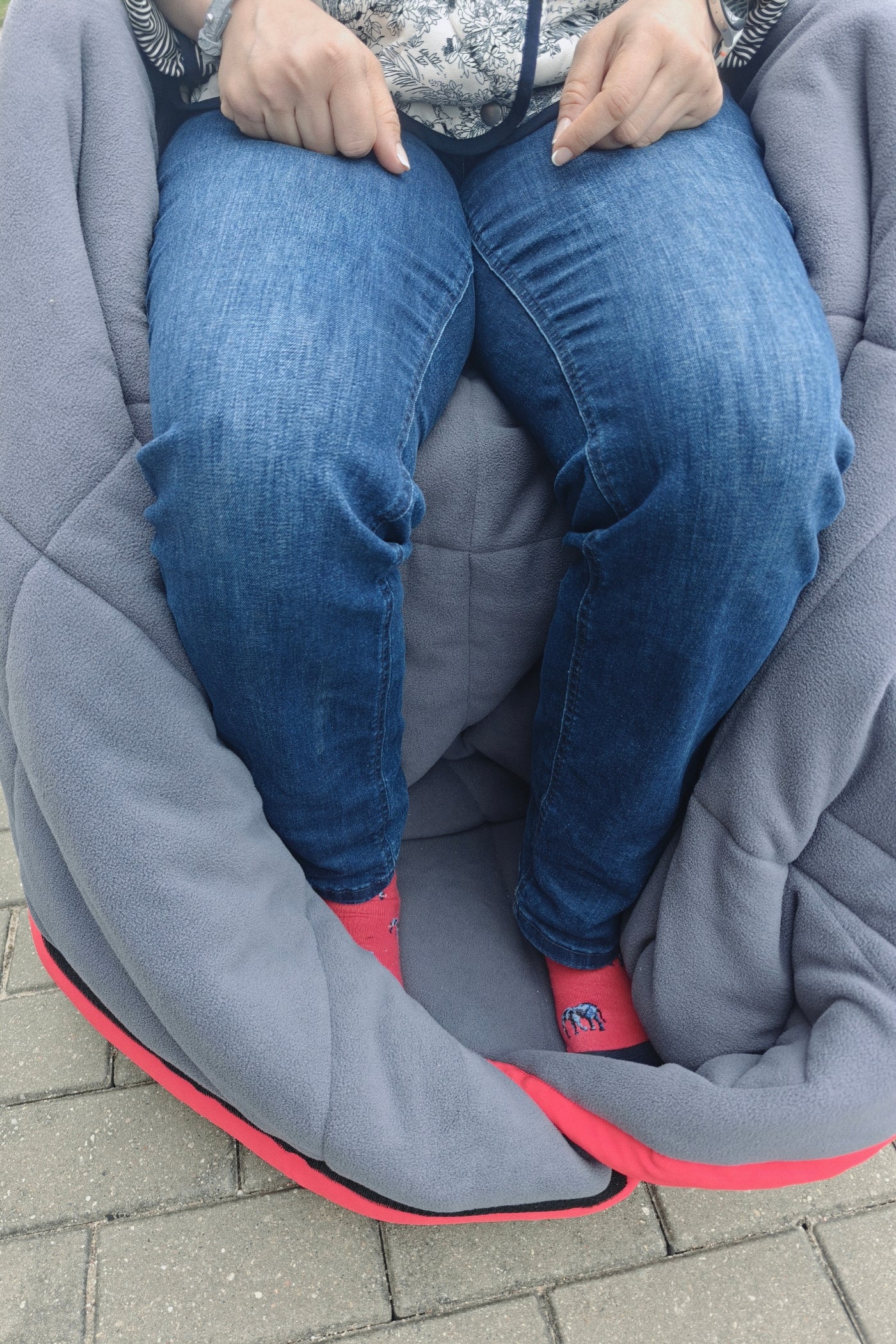
Each layer requires approximately 4 metres of fabric to cover the full body from head to toe, meaning the suit contains around 4 metres of softshell, 4 metres of Thinsulate™ insulation and 4 metres of fleece lining. At the foot zone, 2 mm neoprene has been added for insulation against cold rising from below, along with a non-slip layer to keep feet securely on the wheelchair footrests. The total garment weight exceeds 5 kg, which reflects the volume of material used rather than any compromise in design.

Designed around the care situation

The underarm zips run from the wrist to the waist along the inside of each sleeve, so there is no need to push arms behind the back or work against limited joint mobility. The arm slides in naturally. The front of the suit closes with Velcro fastenings that can be adjusted for a tighter or looser fit, which means the same suit can comfortably accommodate people of different builds. For care homes and institutions, this makes it practical to share across multiple residents.

The suit is available in four sizes based on body height — 140, 160, 180 and 200 cm — and comes in red and black.

A word on value

At €350, this is a purposeful investment, and we want to be transparent about what that reflects. The material cost alone is substantial: over 12 metres of performance-grade fabric per garment, including certified 3M Thinsulate™ insulation, neoprene and non-slip material at the foot zone, and a high-grade softshell outer. Each suit is also labour-intensive to produce. The closest point of comparison is not a pharmacy blanket or a fleece cover — it is a full-body adaptive garment, priced in line with what quality outdoor or ski apparel costs at that level of specification.

In practical terms, this suit replaces a winter jacket, thermal layers, leg coverings, foot warmers and the time and effort of putting all of them on and off for every outing. For anyone providing regular care, that adds up quickly.

Composition and care

Outer layer: 96% polyester, 4% elastane Insulation: 3M Thinsulate™ Type J250 (100% polyester) Lining: polar fleece (100% polyester) Foot zone: neoprene with non-slip finish (polyester webbing with resin coating)

Care

Machine wash inside out at a maximum of 40°C. Do not tumble dry.

THIS IS A PREORDER ITEM, THAT WILL BE SHIPPED STARTING FROM JUNE, 2026.

Sizing

Choose the size closest to the height. For example, if the person is 175 - 182 cm, choose 180. If the person is above 183 cm, choose 200. If you have any questions, don't hesistate to reach out via contact form or via e-mail vilbers@vilbers.com.

Modelled by the author of the design: owner of the company - Zane Berzina

Excellent seamstress work and very sturdy fastening. I totally recommend this shop!

Anna Karin U.

Got questions?

Ask all your questions via this contact form and we'll respond ASAP. Please, paste the link of the product for faster communication. We are here for you!